Episode Transcript
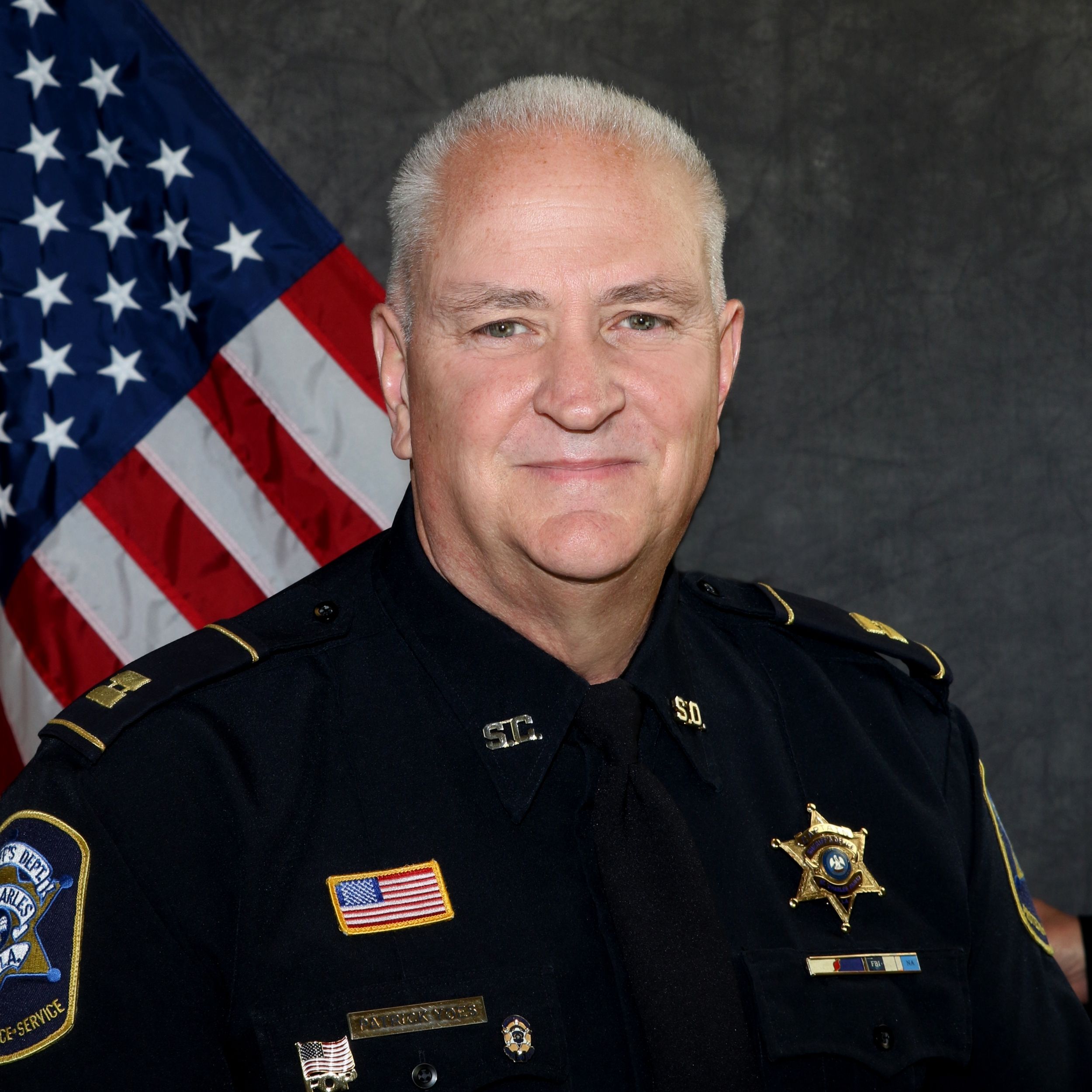
[00:00:00] Speaker A: Today we're hosting leaders from the alliance for Prosperity and Secure Retirement, a coalition with a simple mission of protecting retirement security and keeping politics out of our pension investments. ASPR's mission is to amplify retirees voice, oppose the politicalization of pension funds and expand access to strong investment choices to secure long term prosperity. Joining us today are two leaders of the alliance, Tim Hill, APSR president, retired Phoenix firefighter and longtime advocate for pension integrity, and o', Brien. Obie Atkinson, Anne Arundel county police corporal, president of the county's Fraternal Order of Police and APSR board member. I'm Patrick Yoes, national president of the Fraternal Order of Police and this is the Blueview.
Well, Tim, Obi, welcome. I appreciate you spending some time with us so we could talk about something that, you know, many of our members are either part of or they hope to be part of one day. Obviously, we all want to get to retirement and have a, you know, live a productive retirement life. So as there's a lot to unpack here before we do, before we get into all of this, I'm going to ask each of you and Tim, I'll start with you if you could tell us a little bit about yourself.
You know, it's not too often you find yourself outnumbered in a room with a bunch of cops. So let's go ahead and show a little love to the firemen here and tell us a little bit about your about your background.
[00:01:16] Speaker B: Thank you very much. So as you mentioned, as as a firefighter, I spent 32 years with the city of Phoenix and retired out as a fire captain and a paramed. During most of that time, during most of my career, I was also involved in the iff, the firefighters union. And before I retired, I was the state president, Professional Firefighters of Arizona. So responsible for all legislation, including pension legislation, since Arizona has a statewide system that every firefighter and police officer is in. And as the executive vice president of the United Phoenix Firefighters Local.
And after I retired from the job, I went to work at the IFF office here in Washington, D.C.
as director of their pension department.
And then I've continued to do that work for the iff, basically as a contractor from home.
[00:02:11] Speaker A: Great. That's awesome. And Obi, I mean, a lot of our members know who you are. You know, you know, you're no stranger to leadership in the fop.
Those that might not know you, tell them a little bit about yourself. Yeah.
[00:02:22] Speaker C: Yes, sir. My name is Corporal o' Brien Atkinson. Everybody calls me Obie. I became a police officer 31 years ago, after graduating from the University of Maryland with a criminology and criminal justice degree, I quickly got involved with the fop. I actually became president. With six years on the job, I became president of our local lodge, and that gave me a lot of opportunities. I was able to become a second vice president of our Maryland State Lodge, first vice president of Maryland State Lodge, served on the Education Committee for the National Lodge, as well as assisted with the labor services. And it's all been. It's all been great. It's all been an honor. And I'm still doing. Still doing what I'm doing, still strong.
[00:03:01] Speaker A: Well, we appreciate all your work with the fop. You certainly have left. Left a mark in our organization, and we wouldn't be where we. Where we are if it wouldn't be for people just like you to keep us moving forward and making a difference in, you know, at every level. So thank you, guys. You know, I'm going to get into what we're going to talk about, but I'm just curious, you know, we have a coalition now to protect Pittsburgh pensions, and I'm just curious of what the motivation was for both of you to get involved in this coalition.
[00:03:27] Speaker B: I think there were a number of us for a number of years that have been concerned about not just the subject at hand that we're going to talk about specifically, but pensions in general. Public employee pensions in general have been under attack for a long time, and it's always the labor organizations and their members who step up to fight the fight. But there is this entire ecosystem, or universe, if you want to call it that, that makes a lot of money off of our members. And pension systems, and those include stock traders, pension fund advisors, attorneys, accountants, actuaries, big financial houses, private equity, they all make money off of this system. But it has been very, very difficult to get them to step up and join the fight in their own interest.
So our members always carry the battle. And this was finally an environment where we could sit down with some of those financial folks and say, hey, this is in your best interest to protect us and actually make a joint coalition of both the finance world and the pension world.
[00:04:37] Speaker A: That's great. What about you?
[00:04:39] Speaker C: Well, one of our past presidents, Denny Howe, kind of became a pension guru, and he told me early on, if you're not looking out for your members pensions, you're not looking out for your members.
[00:04:47] Speaker A: Exactly.
[00:04:48] Speaker C: And so it became a kind of a passion of mine to make sure that I understood the pension laws in Anne Arundel county, understood the board of Trustees who serves on that board and made sure that we were represented kind of at every level. And so I also chair a lot of coalitions within the county, a lot of employee coalitions.
And our. I've learned that we're better together. We are so much more powerful. No doubt when we form a coalition of police officers, firefighters, general employees united, we lead.
[00:05:18] Speaker A: Yes, no doubt, no doubt.
Appreciate it. So. So Tim, you recently wrote an article that was in the Washington Times titled Stop making a retirement a political Battleground. And I think you may have already just kind of, you know, lead us, led us into that with your, your introduction just now, why you got involved. But to talk about that article and the premise of the position you've taken and why it's so important to public employees.
[00:05:45] Speaker B: Yeah, the position and really the main activity of the alliance for Prosperity and Retirement Security is that you now have elected officials, politicians and bureaucrats from both sides of the aisle, depending on what state you are in. This is mostly a state by state activity where they now want to use the influence and the money of our members to enact their social or political agendas.
And that is not what pension plans were built to do.
That is outside of the duty, the fiduciary duty of the plans, which is really their duty is to you and me and our families. The only thing they should be looking at when they're looking at investments is what, what is the return? What is the risk? What is the long and short term returns and how does that help the fund and the beneficiaries?
Nobody has, it's really nobody's business to use our members retirement security and our retirement future to enact a political agenda. Whether it's to say don't invest in oil or you should only invest in oil or invest in guns. Don't invest in guns. None of that comes into play when pension funds are evaluating the financial stability and ability of companies and stocks that they invest in.
[00:07:11] Speaker A: You know, by design, these, these plans should be in many cases are, but maybe not always designed by, managed by the people who actually own it that are the benefactors for it. When you have people that have no interest in it and are dictating.
Yeah, I could see where that kind of clouds everything up. You're right. It has no business in it really. The whole, whole purpose it is, this is, is to be able to take an investment, grow that investment and provide stability to people in retirement years.
It's not a political statement. So. Well said. Well said. Obi. You want to add anything to that?
[00:07:44] Speaker C: I Do actually, the way these boards are made up often, especially with government pensions, a lot of the positions are ex officio and the just the framework of the board of, of trustees itself kind of makes it subject to a possible political influence. And when I say that, for example, in our pension system, the chief executive officer or the chief administrative officer for the county serves as the chairman of the board. Our personnel officer is the secretary. The budget officer serves on that board. The director of public works, the controller, three civilian appointees serve on the board appointed by none other than the county executive.
We do have police officers, firefighters, we do have individuals. But at the end of the day, we're outnumbered. And the important thing to remember is those fiduciaries do have a legal responsibility to do what is best for us. For the people who are receiving the pensions and the pension system itself, elected officials don't, don't have that legal responsibility.
[00:08:45] Speaker A: So it seems to me there were some legal challenges quite a few years ago that said that if I have a fund and if I've invested in this fund and you need to give me a voice in this, this fund. So how does this apply to people who don't have a, if they're not invested in fund and get to make these decisions that ultimately impact those who it's their money, this money is being invested. How do you reconcile those two?
[00:09:05] Speaker B: Well, I think, you know, the situation that OBI just described is one way that boards are put, are put together and there's a variety of ways across the country we are outnumbered classically. But you typically also have on those boards, at least up till today, people that were appointed because of their sometimes political connections, but also their depth of financial and investing knowledge. And in those boards we typically have both active and retired firefighter and police officer trustees. And in some funds those, those employee reps are directly elected by the membership, depending on that state or that local jurisdictions law. But part of our concern with this, since we're talking about trustees, one of our big concerns is not just about how elected officials are trying to influence investment dollars, but also the appointment of trustees. We have seen a couple of attempts across the country already where governors are trying to remove trustees who won't go along with their political engineering or in states like Ohio where they passed a bill that removed, in the teachers fund, removed the ability of teachers to elect their own representatives to that board. So these are kind of threats that we're seeing together with the actual threats to investment.
[00:10:30] Speaker A: And look, I'm going to play, I'm going to Play the guy who really doesn't understand all this. You know, I just, all I know is, is when I flip a light switch, I want the light to come on. When I, when I get my pension check, I want it to be there and I want it to, you know, I want it to be sustainable.
I'm. Help me understand how it is that, that if it just seems to me we have a property right to something, we've earned a benefit. And because we earned a benefit, we earned some control over the future, that benefit. When people do not have a vested right with, you know, vested.
Any kind of vested relationship to this fund, how do they, how is it that they get to silence the voice of those who are, who are actually own the system they own? I mean, it's their investment that's, that's being, you know, that's being, you know, that we're talking about here. So if they have no tie, have no relationship to it whatsoever other than an appointment, isn't their responsibility? I mean, look, if you, you know, regardless of what business you're in, you have a duty of responsibility, duty of care, where's that duty and responsibility? How does it apply to trust funds? I mean, to, to pension systems, when people are making decisions that have no vested interest in it whatsoever and they're doing it for something that maybe it's not in the interest of the, the plan, but like you said, the political battlefields.
[00:11:47] Speaker B: Yeah, I mean, that is, that is, when I say this facetiously, one of the beauties of the American political system is when someone is elected. No, they, it comes with a lot of sway and it comes with, with a lot of, a lot of power.
And it does put particularly our member trustees really at both a moral and a legal risk because on one side they have elected officials such as a governor, maybe even a law that's been passed by the state legislature has happened in Texas and Oklahoma that is counter to their legal and moral fiduciary duty to the beneficiaries of the fund. So if I understand, you know, your, your question correctly, it's like, how do we deal with this? I mean, this alliance is one way that we deal with this so that we can help our members on a state by state basis push back on this. Whether it's in Texas where they say you can't do business with the number of banks who are invested in green energy, or New York where they're trying to run a bill that says, you know, you have to get rid of not a bill, but a rule that Says you have to get rid of all your oil stocks. Neither one of those things meet the fiduciary duty of what a trustee is supposed to be doing. So it puts the trustees in a very difficult position. So how do we push back on that? Exactly what we're doing right here. Educate the members so in the leadership so they know how to push back in their states and say, you know, leave the social engineering to the state legislatures, you know, the political battles.
But what we're doing here in a pensions fund is really very simple. We have a duty to provide for the benef, you know, the beneficiaries, and also to invest in a way that makes sense, you know, for, for the taxpayers. Because if you start investing or uninvesting in things based on social engineering and not the finances, you're going to drive up the cost of the funds.
[00:13:46] Speaker A: So I know we have a lot of FOP lodges. I mean, we certainly encourage it. And look, I applaud, I applaud this effort. This is, you know, I served as, not as a member of our pension board, but as a rep for my, for my agency within my region for a period of time. So I know there's a lot of work goes into to managing a fund with a common goal of making sure that it's solvent for all that's involved.
You know, my pension systems in Louisiana and, you know, quite proud of the pension system we have. I know there was a challenge at some time about the representation on it and I'm not sure how it came to be, but they ended up balancing a board out. So it was, you know, at one time it was leaned more towards administration and if it was a lawsuit or some settlement from a lawsuit that evenly balanced out. So everyone had a voice on the pension system and really that's how it should be. And someone who doesn't have a vested interest in it shouldn't be making decisions on the protection of my money for whatever reason. It just seems that the ones who own it should have some voice in it. So with that, I know that we certainly encourage our members to be part of this coalition because it's something that's needed in order to protect our future.
I'm going to go back to a challenge that we have in law enforcement. Public safety for that matter, is there's two things everybody needs in life.
Whatever what their job is, it doesn't matter what you do. You want to feel like what you're doing is important and what you're doing is appreciated. And if you don't have those two things.
You're not getting anywhere. Well, we're no different. We work in public safety and we want to feel like what we're doing is important and we're appreciated for doing it. One of the ways to show that appreciation is to keep our promises. And the promises are that if you work this job, I'm going to, you're going to receive some benefits just like every other American has. We're no different. Nobody's given us anything with this. We've earned these benefits. Regardless of where you worked in this particular case. We happen to work for the public sector. The difference now is, is that the public sector can take public officials and place them into decision making on our part, which they don't do that in other. If I was in 401, it wouldn't be the same, would it?
You know, so I appreciate what you're doing. Help me understand or help my members, you know, understand when they're listening to saying, you know what, I like this, we need to be part of this.
What do they need to do to become part of this coalition and what can they expect to receive from the coalition by becoming part of it?
[00:16:13] Speaker C: Well, I think just by becoming a part of the coalition. One, police officers support those who support our officers. Right. And so it, you know, the, that's what the alliance does. It supports police officers and their families.
[00:16:28] Speaker A: Right.
[00:16:29] Speaker C: As you've reminded me for years, cops love free stuff.
[00:16:32] Speaker A: That's it.
[00:16:32] Speaker C: And to be a member of the alliance is absolutely free. But when you become a member, you have kind of a constant reminder to be vigilant. You have somebody who's going to tell you what's going on in New York, what's going on in Texas. You see what's happening across the United States, and you become mindful and you become very, very, I guess, sensitive to these subtle, subtle changes. Because when they try to change the law and they talk about, you know, pension reinvestment or changing vesting schedules and things like that, a lot of officers don't even really understand what that means so much. And they think, well, it's not me. That's probably just for new hires now. It's absolutely for you. So there's a website that they can go on. There's a, a QR code. Hopefully we could flash that up.
[00:17:17] Speaker A: We'll get that. Absolutely.
[00:17:18] Speaker C: And, and all you have to do is give the information that you have.
You're not going to get an email every day, every week, but when things happen, you're going to be aware of It. And that's information that you can share with your members, especially share with your trustees who serve on those boards. And, you know, knowledge is power.
[00:17:37] Speaker A: Absolutely. So, so just help me carry just a little bit further.
I joined this coalition. I've got a pension system. I've got 500 members in my agency. We're part of a PE pension system. We want to be much more engaged than this. What other resources would this coalition be able to provide to them to better understand and take, take some ownership in their, in their pension systems and in the management of their pension systems?
[00:18:00] Speaker B: I think there's, as, as we talked about, this is a coalition, right? So there's resources that come from financial industry side, there's resources that come from the labor side. And the alliance is mostly focused on this piece of keeping the politicians out of our fiduciary business, I'll call it. But how, how the members benefit from that is when there is an active battle saying in your state over these issues, the alliance can be very helpful in helping to magnify that issue, bring a focus and a spotlight to what the elected officials are trying to do in a negative way and bring some media resources to bear to make sure that the citizenry knows about that and to assist members and affiliates, both local and state affiliates, in their job of battling that, that bad legislative activity that's going on. We're a fairly new organization, so we do want to expand some of our activity into actually, you know, helping to educate your members and our members as well on what their pension means to them. I mean, that probably won't include, like, when they get retired, you know, when they retire to look at, you know, their financial planning, but to help educate them on, you know, what the system is really worth to them. I mean, we just went through this huge battle together, firefighters and FOP on fixing the Social Security situation. Right.
So for those. And I was one of them who worked for an employer that was not in the Social Security system.
But, you know, like most other folks, I'd had other jobs. I was a roofer before I got on the job, you know, second jobs while on the job, you know, that Social Security didn't count.
Now it. Now it does.
[00:19:58] Speaker C: Right.
[00:19:58] Speaker B: So we just, I think, continue not just the legislative battles, but the membership education on why the alliance and why the FOP itself is valuable to them, not just today, but for the rest of their life. The pension that, that, that keeps on giving, so to speak, for our security.
[00:20:21] Speaker A: Well, I think one goal we all have is, well, I'll Want to beat the actuary.
[00:20:25] Speaker B: Right.
[00:20:26] Speaker A: That's number one goal.
So I've just, just kind of wrapped this up.
You know, point. The obvious, the obvious is, is that we don't know what we don't know.
But by, by, by getting together as, as we said before, you know, together we lead when we're united. We understand in a coalition, one thing the coalition can do is they can provide that united voice. But in addition to that, what they also can do is help you understand a very, at times very complicated process and, and navigate through to what's, what can and what can't be done. So knowledge is power there. So again, I'll be you mentioned before. I'll let you, I'll let you wrap this up unless there' Would you like to add about what the coalition, the benefit of the coalition.
[00:21:06] Speaker C: Well, there's a couple of things. One, the great irony is that when they do play with our pensions and when they do miss or I guess mismanage or underinvest in the pensions, it becomes harder for us to defend those pensions. And then they look at the pension, they say, well, it's too costly. Well, it's too costly because you, you mismanaged the pension years ago and now we're, now we're stuck with a very high cost and it becomes difficult for us to defend the cost of the pension to the taxpayer. And you know, I think something very similar happened in Baltimore City where they said, oh, our pensions are costing too much. They took what was a 20 year retirement and they said, okay, we're going to make it 25 years. And they applied that to every police officer with 15 or less years on the job. And that was so unfortunate. They took it to federal court, they fought it.
I don't. They did not prevail and oftentimes it's difficult to prevail.
I wish that we had an alliance all along. I know it's relatively new, but, you know, I served as a chairman of our Pension Oversight Commission and the county executive absolutely hated it. I've served there for 12 years.
They tried to pass a law to remove it. It's actually in our charter. And no bill can be passed by our county council without having heard from the Pension Oversight Commission first.
[00:22:26] Speaker A: That's it.
[00:22:27] Speaker C: And every jurisdiction should have one. If not, they should get their elected officials to pass a bill and create one. It's just oversight.
[00:22:34] Speaker A: That's the information sharing that can be beneficial to a coalition to understand these challenges and how you able to overcome. Yes, sir, absolutely.
So, so Great work, great work, obi. Again, if somebody wants to know more about how to become part of this coalition, bring their lodge in or bring their agency in, bring their pension system in, depending on what level our pension systems are.
Again, what's the best way to go about that?
[00:22:59] Speaker C: Contact us. We have a website, it's the apsr.com.
[00:23:05] Speaker A: We'Ll put it on it, we'll put.
[00:23:06] Speaker C: It on a screen here and aspr.com.
[00:23:09] Speaker B: It'S alliance prosperity.com I think is the actual web address. But we're going to put it up on screen to make sure you get the right information. And there is a membership page there and we're looking for individual members, you know, thousands, so we can activate FOP members when there is a need in your local jurisdiction or state on this, on these issues. And also it brings power to the conversation with politicians when state and local affiliates also belong. And on that information sharing, I also want to say, you know, again, for right now, our focus is really on stopping this, this bad legislation and the executive orders that hinder a plan's ability to invest appropriately. But also, you know, our FOP and IFF members who are pension plan trustees, we need to protect them and their independence, their decision making, you know, and their appointment ability as well. And if we work together on these issues, and there's a few other national organizations I want to mention that, that the FOP works with and we all work with together on pension, pension issues, National Council Public Employee Retirement Systems Nurse, which is the National Institute of Retirement Security, which has done some great, they do the academic work. If you need studies, they have great studies that show how well, you know, these plans work for the states, the localities, their economies and the members as well. And we look forward to just continuing to work together with those organizations to make this happen.
[00:24:51] Speaker A: Great. Well, keep up the great work. I think if there's one message that I have for our members is don't feel bad about pension. You've earned this pension. Nobody's giving you anything. You put the time in, you had a promise made to you, you received that pension and you should have some control or some direction on how that pension is used and how it's invested. Keep up the great work it's needed. I appreciate the coalition. I encourage our members to become part of that coalition. And you know, again, when we're together and when we're all, when we're all well informed and we're educated, we can make a difference. And so I appreciate it, gentlemen, thank you for joining us. I appreciate it. Any final words?
We sign off.
[00:25:31] Speaker B: Stay safe.
[00:25:32] Speaker A: You got it.
Thank you. Thank you for joining us. To the men and women who who suit up and show up every day in communities across this country, thank you for tuning in to the blueview podcast, where we talk about those issues that are so vit important to those in the law enforcement and public safety fields. Thank you.
Be sure to subscribe on Apple Podcasts.
[00:25:53] Speaker B: Spotify, or anywhere else to get your podcasts.
[00:25:55] Speaker A: To get the latest from the national fop, make sure to follow us on Twitter and Facebook, LFOP and on Instagram Op national thanks again. We'll see you next time.
Whoa, whoa, whoa, whoa, whoa, whoa, whoa, whoa, whoa, whoa, whoa, whoa, whoa, whoa.
[00:26:14] Speaker C: Whoa, whoa, whoa, whoa, whoa, whoa, whoa.
[00:26:17] Speaker A: Who.