Episode Transcript
[00:00:00] Speaker A: Today we're digging into some of the toughest challenges facing law enforcement in America, from border safety to national security to communications and staffing, to staying connected within our communities.
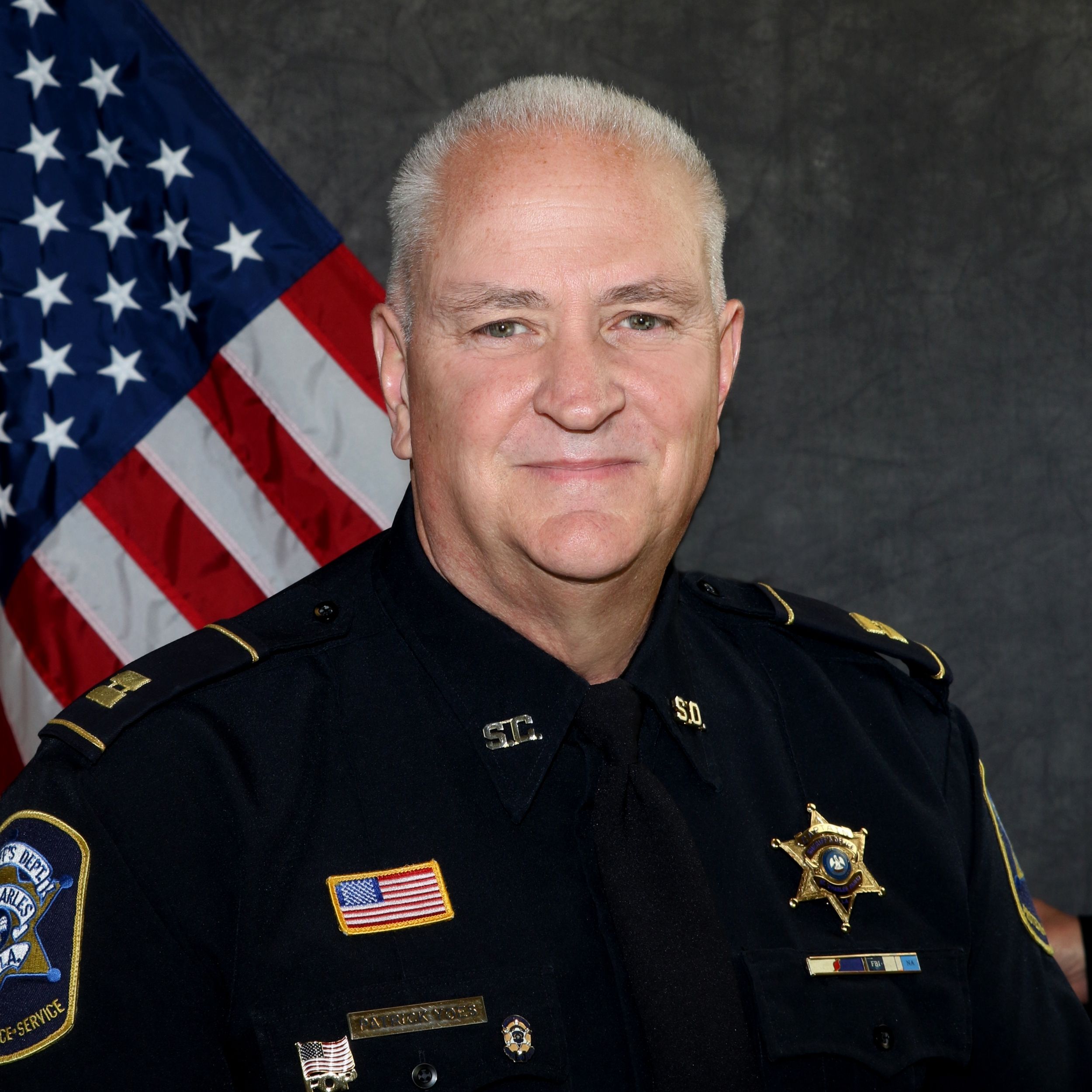
Joining me today to unpack these issues is Sheriff Mark Lamb, known by many as America's Sheriff, a law enforcement veteran who's been right in the front lines of many of these fights. Sheriff Lamb has been a vocal advocate for tougher border policies, modernizing emergency communications and defending constitutional law. Together, we will explore what law enforcement needs right now, what's working, what isn't, and how we will move forward together. I am Patrick Eos, national President of Fraternal Order Police. This is the Blue Heel.
Sheriff Lamb, thank you for taking some time to join us. I know you're in Houston now. We appreciate you just finding some time. I know you've got a pretty tight schedule, but you and I recently just had an opportunity to spend some time together in Indianapolis and I had a great conversation. I really wanted to kind of share that conversation with our members across the country. So before we dive into just kind of the state of play when it comes to law enforcement, your journey, which puts you in public safety, really tell our members and tell our viewers and listeners a little bit about yourself.
[00:01:14] Speaker B: Well, Pat, first of all, thanks for having me on. It was such a great time spending time with you and Jim and your wives.
And honestly at that event where we talked about communications and the importance of communications.
But I've been the sheriff in Pinal County, Arizona now for the last eight years. I ran for the US Senate and didn't win. And because I did that, I couldn't run for both positions. So I retired as the sheriff of pinal county on December 31, 2024. And just to put it so anybody, everybody knows where Pinal county is. It's between Phoenix and Tucson.
Our county was 5,400 square miles. So for the east coast folks, that's the size of the state of Connecticut.
We had 600 employees, we had 500,000 population and.
[00:02:04] Speaker B: We had a budget of about $60 million. So fairly large agency, full service. We were responsible for law enforcement, jail, everything. We had 1500 bed jail. So that's where I've been. We've been dealing with the border issue for the last four years. That's obviously changed over this last year. But even though we're not on the border, we deal with a lot of that trafficking coming up. Any drugs, any people that come through the southern portion of our country in Arizona are going to have to make their way through Pinal county at some point to get to Phoenix. And so we've been dealing with that issue for the last four years. But that's who I am. I'm all, more than importantly, I'm a father, I'm a grandfather, I'm a husband. Today's my wife's birthday. So as soon as we're done here, I got to finish doing my post for social media because I'm in Houston and she's in Arizona, and I we'll see how I survive this one.
[00:02:53] Speaker A: There you go. And look, I know those challenges. I know in the roles that we have, it takes a lot of toll on family life. So kud to you for that balance and working towards it. And I know your wife is very active in this, in his mission as well. So we'll come back and maybe finish up with that. But I thought maybe a good place for us to talk. You know, you mentioned, you know, we were together last week talking about communications. I'd like to kind of talk about the evolution of communications. I think you have a very good analysis of it, just depiction of it, and then kind of roll that into the kind of the state of play in law enforcement in today's society, journey we've had for the last few years and where we are now and where you see going. Let's start with communications. So communications is the backbone of what we do in public safety. And no question about it, our ability to be able to effectively communicate amongst ourselves, you know, within our agencies is important, but also important to be able to speak same language and ability to be able to, you know, have that, you know, overcome interoperability and communicate with others. Because crime and our challenges don't know boundaries, they don't know jurisdiction lines. They know that, that every minute and every second counts when it comes to an emergency. And so. But you gave a pretty good analysis of kind of the evolution of where we are and, you know, where we were and where we are today. So I'll let you unpack that a little bit.
[00:04:16] Speaker B: Yeah, and I don't want to take too long, but you know, communications obviously is one of the most important things in our profession. Our ability to arrive at a, in a timely manner to an emergency is the meaning, is the difference between life and death.
But this isn't something new to us. Even though most of us, when we started this career, we started with a pen and a paper and a map book, if we were lucky. And we had to learn where these places were, we had to be attentive to everything Nowadays you got a computer in your car, you know, the calls are coming in, the radio systems are encrypted. They're so good and clear. There's just a lot of changes. But you go all the way back even to the start of this country. You know, some of the earliest communication systems, although people don't realize it when they hear the story of Paul Revere. When Paul Revere rode 20 miles that evening to tell the people across the countryside that the English were coming. Paul Revere, it just wasn't just like he heard it and then he said, oh, I'm going to get out there and ride. They actually had a communication system put in place. They would put a lamp in a high point. And if they saw the lamp, one, if by land, two if by sea, if they saw one lamp, that meant the English were coming, coming by land. If they saw two lamps, that meant the English were coming by sea. And so then he saw that, and then he began to ride. But look at how cumbersome and chunky that was. He had to then ride all night long to deliver the message. As we went through the years, it started progressing, especially since the 1900s, Detroit being one of the first places in 1928 to install a radio system where they. They went from call boxes where a guy had to pull over and call into the station to find out if there was any calls for service. Then they were using Telegraph.
Then in 1928, Detroit decided they were going to do something better. So they had a car, a radio in the car, but they couldn't communicate. They could only receive the calls for service. And it's just progressively gotten better since then. And I think even in the last 20 years, I think you would agree, Pat, it's gotten even exponentially better. A lot of the catalyst for that was what we just saw. We. We just remembered the other day. I don't want to say celebrated because we didn't celebrate it. We remembered 911 the other day. And if you look type in communications for law enforcement and AI and AI will tell you that one of the biggest changes was 911 because we realized just how limited we were on our ability to communicate with one another. And that was what bore that was the birth of AT&T FirstNet or FirstNet, the FirstNet authority, not really the AT&T piece of it, but as FirstNet, they realized they needed that. They started to build that out. It was implemented maybe 10 years ago.
[00:07:04] Speaker B: 20 years, 18 years ago, I think 15 years ago, because it's up for reauthorization right now, AT&T partnered up with the FirstNet authority, and that gave us the ability to be at the top of the heap when there's an emergency. Our cell phones and law enforcement, our radio communications are going to get primary. And that's why FirstNet is important. I just want to say one more story, one more thing to this. I watched the movie F1, and if you haven't seen the movie F1, it's about Formula One racing. Brad Pitt, great movie. But what I realized as I was watching that movie is their whole goal was to shave seconds off the race, but there's 60, 70, 100 laps.
So what they would do is they would shave off a tenth of a second per lap, and those tenths of a second added up to many seconds. But in the end, they were dealing in seconds, and most of the time they were dealing in fractions of a second. And they were spending millions of dollars to shave just a fraction of a second. Why? Because it was the difference between winning and losing. And in communications and law enforcement, those fractions of a second are the difference between winning and losing. And frankly, even more importantly, it's the difference between life and death. And so I've been very involved in communications. I want to make sure that we get FirstNet authority reauthorized so that we can continue to have some communication system that puts us at the top of the heap so that we can respond appropriately and in a timely, even if it's fractions of a second, a timely matter to life and death situations.
[00:08:40] Speaker A: Yeah, no doubt, no doubt. I'm just up here in D.C. right now, spent a day on a Hill yesterday, meeting with members of Congress for that reauthorization. It's important that they act on it. It is up for reauthorization. And it's. I understand when he put it in, you know, it was a kind of a new concept. It was, you know, using spectrum in order to be able to fund a platform. And, you know, it was an unknown, but we certainly know what the end result.
We know that we have a very robust, dedicated platform for first responders, regardless of what agencies they're with, anywhere or their size of those agencies.
It is a very effective tool that's constantly growing and evolving as we move forward. So I appreciate your hard work on that as well. And something. We certainly both share the need to be able to shore up those communications well beyond this period. We're past the experiment part. We know that it's a proven entity, and it's time to keep it Going, Jerry, I want to shift gears a little bit. And you know, we're at a strange time in law enforcement and I know, you know, you witnessed that. You were sheriff during these times as well. We went through a kind of a difficult time when we went from public servants to public enemies overnight because of a few high profile cases. And in reality, there's about 800,000 men and women across this country every single day suit up and show up and make a profound difference in the lives of the people they serve. Yet we weren't really feeling it during that time. A lot of things happened during that time and the end result is that.
[00:10:12] Speaker A: By the grace of God, we go to work every day and we make a difference. And.
[00:10:19] Speaker A: It really was a very difficult time for our profession trying to get the next wave of the best and brightest to come into law enforcement and be the future.
It's just a lot of challenges facing law enforcement. So let's, let's talk about those from, from, you know, the, the border struggling with, with, with the unmitigated, unmitigated disaster that we, you know, of the border safety to drugs in our country to just a general attitude towards law enforcement. And you give us, give me your perspective on it from, from coming from, from Arizona in a place that in a lot of ways was a kind of a ground zero to the, to the, the influx that we saw, the crime that was created by the open borders, unsecure borders.
[00:11:01] Speaker B: Well, yeah, I'll dive into the border in a second. But you know, when we talk about this profession, our profession has progressed substantially. I think you share our sheriff. Chief Pat, you've been in this profession a long time. You have seen the evolution of it. Our men and women have. They do a really great job. The difference has been really what we're clashing with in society. Society has become less and less accountable. They don't want to take accountability for their actions. Their behavior is changing. The amount of mental health we deal with in the streets is exponentially higher. And so this is clashing now with the profession that is, that has been tasked to hold the line and preserve the peace. But society won't take any responsibility or any accountability for their behavior. The easiest thing to do is to blame the police.
It's much like many people may, watching this, may or may not agree, but there's, it's much like when we see a shooting, immediately there's one side that will go to blame the gun, which I think is poor leadership. Instead of actually understanding why somebody would do something like that they choose to blame an inanimate object instead of going after what the problem is, which is mental health in this country. And we in the law enforcement, we're right in this very public middle of, of mental health and accountability in our society and upholding the rule of law. Because the rule of law is what allows us to be a peaceful and a functioning nation. If we lose that, we're in trouble. And I think that is really kind of what we've dealt with in this profession is we're doing a great job, we're on body camera. And they can find very few of these instances where they can try to cast dispersion on us. But because we're dealing with all this stuff, we tend to be the ones get blamed because society doesn't want to take responsibility.
Now, moving on to the border, it's another piece of that rule of law. You can't have a functioning country if you don't have a good rule of law. And you certainly can't have one if you don't have a secure border. And over the last four years, what we saw was.
[00:13:12] Speaker B: I mean, nothing short of a complete and utter disaster. And it was something that could have been prevented. We had politicians who decided that they were going to open that border, allow a ton of people to flow in. We had people coming from all over the world. I think they say 11 million. I think at minimum it was 15 million over the last four years and it could have been much higher. Here's what's very alarming about that. We saw a lot of military age men coming from a lot of different countries. Countries where they're not friends with us, they're enemies to us, are Iran, Russia, Ukraine. They were coming from the Middle Eastern countries, from Africa, from China. We a ton of Chinese coming in. And now we've let the wolf in the house and now we're trying to get the wolf out of the house and we're running into resistance from our own people. Again, the same people who don't want accountability, they also want to allow the folks to come in here and break the law and create a real problem for us. One more thing too with that, the border.
Whenever people cross the border, that's a federal issue. But as soon as you cross the border, the people that die from fentanyl poisonings, the crime that comes because of the what they brought in, it's us in local law enforcement that have to clean that up. And over the last four years, we have had an exponential increase in the amount of things we've had to increase, to deal with. We've had to deal with all sorts of those fentanyl deaths, drugs, all of this stuff which is increasing mental health, which is causing a problem full going full circle back to where we were in the beginning of this conversation, back to where we're clashing in law enforcement with society because of the mental health issues. So it was a real problem actually.
So much better right now, which is really good. I was just down at the Texas border yesterday riding the Rio Grande and before people were swimming across there all day long. Now you're seeing nobody. Same with on the borders of Arizona. There's a small trickle compared to what we had and it's allowing us to kind of get on top of this problem that's already in our home and we got some work to do there before we're going to get, we're going to get it fixed.
[00:15:26] Speaker A: Yeah.
I want to mention when we talk about immigration, we're a nation of immigrants. We were founded on that very principle.
[00:15:37] Speaker A: The key thing here is there needs to be some structure to it and for a period it wasn't.
So you're right, it's created a whole bunch of problems. And I testified before Congress one time and I had a senator tell me that they weren't from a border state and I quickly corrected them. So. And actually you are at a border state. I think we're all border states now for a number of reasons. You know, one, because people from those open borders have ended up in of all of our states and in addition to that, the Internet and technology has changed in such a way that we're all border states, we're all dealing with a whole new set of standards that we, we've never dealt with before. So you know, I want to make it clear this is not an anti immigration, this is a, this is, this is, there is a structure and it should be a structure. And when we abandon those rules and when we aband mentioned about the rule of law, you know, look, we all know the difference between right and wrong. But when we start blurring the lines of what's the difference between right, right, wrong, it makes it very hard for people to follow. And that's when, that's when a lot of the destruction that we see and the erosion of the lack of consequences and, and I guess the justification and you know, we're a very litigious society. It's always somebody else's fault.
We've kind of lost our way, you know, with, with just by blurring these lines and it's time to get back to the basics and recognize that there's a structure and some order do. And when we follow that order, then we have a safer community.
I do want to, I want to go back and you mentioned about the challenges that are facing law enforcement. You know, if there's a, there's a fight in a playground, call the police, they can handle it. There's a fight in school, call the police, they're going to handle it. If there's a barking dog, call the police is going to handle it. If you can't get along with your neighbor, call the police. Are going to, we are called to do and deal with everything from just a wide spectrum. And I want to make something very clear. When you look at law enforcement today, you know, I've been around a minute, so I've watched the evolution just in my 36 year career.
But I can tell you this without a doubt, unquestionable.
The men and women in law enforcement today are better equipped, better educated and.
[00:17:40] Speaker A: Better complete every tool that they need by light years away where they were a very professional group of individuals that, that dedicate their life to public service and the protection of others. And so my hat's off to people that step up and take that follow that servant heart and serve their communities. And probably not a more profound way you're going to be able to make a difference in the lives of the people you serve. You know, we deal with a segment of population and many people like to think don't exist. And the reality is there's some bad people out there want to do some do things to good people and we're the thing that stands between them. So this really is. When you look at our profession, those who are, are coming into our profession, is it hats off to a man. It really is that we own such a, such a great debt of society, you know, for what they provide for society. In reality we're not getting the respect from that and it has a lot to do, a lot of reasons. So we can unpack that for a while. But I want to talk about just briefly because I don't want to harp on it kind of where we were for five, six years and the erosion of people who were quick to blame law enforcement for everything that we were failing in society. And in reality it wasn't us. I mean, I don't know about you, but I've never made a law. But I have enforced them and I enforce the laws that are made by other people. And in many cases the same people that criticize them because we're enforcing the very laws that they created. It really is time to get back to the basics. And so I want to, I want to talk about.
I see, I see a light at the end of the tunnel. I see there's a renewed pride and sense of pride for law enforcement and for public safety, for that matter. I see that that appreciation is now showing. Where we have people are more than they have been for a while, stepping up to take the, you know, the path of public safety, follow their servant heart.
But we still have a recruiting retention problem. We still, we still need to find a way to pull the best and brightest into this profession so they can be the next wave of law enforcement and help, help guide and direct the, you know, where we go as a profession. So what do you, what do you say to someone who's, who's either finishing school and saying, you know what, what is my going to be my profession? What am I going to do?
Or someone who's maybe working in a private sector says, you know what? I want to follow my servant heart. What message do you have to those individuals and how rewarding it would be for them to, to come into public safety?
[00:20:10] Speaker B: Do it, do it. It's a great job. It's an honorable job. You can go home, you know, you may not be a millionaire at the end of the day, but you're going to go home and you're going to feel good about what you did in your career.
You know, we talk about how this kind of shifted on law enforcement, but the reality is it's not as bad as people are believing because the media and the politicians have really controlled a smaller piece of the narrative. There's a scripture in 2nd Kings 6:16 that says, and he answered, fear not, for they that be with us are more than they that be with them. And that's the truth. If you go poll after poll after poll, we're 60, 70 plus percent of approval rating in the, in our profession, which is pretty high. You know, Congress is at like 9%. So they're not getting any, any type of, and the media is not much higher than them. So it's really the media and the politicians that have, have spun this message to the, to the world, to our country, to the average public, that the police are on the wrong side. And when reality, the majority of Americans still side with us, even in some of those communities where they're told, you don't like the police, I think those people, even in those areas, sometimes those poll, they poll even higher. So just so everybody knows. I think the majority of Americans, poll after poll would confirm what I'm saying. They, they support law enforcement. They understand the need for law enforcement and the mission that we do. The media just likes to highlight the people that don't, and they like to highlight the situations that make us look bad because they don't like the rule of law. And politicians, you try to use it as pawns. So that's one of the problems. Jobs, as far as this being an honorable job, do it. We need warriors now more than ever. We need men and women that are willing to do the job. And for all those legislators out there, you can help, because what's happened is, is in every state that I know of, we continue to move the retirement goal post. It used to be 20 years, and you could retire and you'd get half of what your highest three years were. And then because they're so poorly managed, they move the goalposts.
And so now we're looking at 25 years and mandatory, you know, 57 years old, and now we're 401ks. And so what we've done is we have created a job and not a career. And what I would like to see, starting with the retirement firm, men and women do this job. I would like to see them, those. Those benefits restored to where they should be so that a guy can come in and see the light at the end of the tunnel and treat it as a career and master his craft as opposed to coming in and doing for it for five to 10 years and realizing they move the goalposts too far on you. Yeah, and one other thing is we've got to. We've got to pay our men and women the right way. You know, this is. We don't. We're not paying them enough to go out and do this job either. So I'd like to see more pay. I would like to see an increase in the technology, which they're doing every day. I would like to see us get the retirement back in place.
So these men and women want to do this job. And one more thing that I've seen is God bless all of our veterans that have served. Many of them served for less than four years, three years, yet they will have lifelong health benefits. And they will also. Some of them will get some type of disability or they will also have the ability to buy a home on a VA loan. And many of them were never even in a combat situation.
Now you take law enforcement. We're in combat for 20, 30 years, our entire careers. We're on the streets. There is no non deployment time. We are constantly in the mix of it. And when we retire, there are no programs like that that allow law enforcement to buy a home or while you're doing the job. Very few, and they're not very solid plans. We should put something in place much more like that that incentivizes our men and women to serve in law enforcement and benefit them with, you know, a no down payment home or some type of healthcare at the end of the road. For the men and women who actually have done 20, 30 years of service to their communities.
[00:24:22] Speaker A: Yeah, there's a, there's a number of the things that you've identified as passed forward are things that have been introduced to Congress either in the last Congress or continuing again. This Congress and all things that we have supported. The fraternal water police has backed those. You're right. What we need to do is we need to get back to the basics of protecting those who, who step up in public service, whether it be police and fire or ems, and give them the tools necessary to not only do their job, but also show the appreciation. Because look, when it comes down to it, the core factor, the core function that we do as a government is to provide the safety and security of those we serve. And everything starts there. Any, you know, when you have, you know, great recreation programs and arts and you know, park and all of these things are all important, don't get me wrong, I'm not downplaying any of that. They're all about the quality of our community. But it all starts with one thing. If people aren't safe, if they don't feel secure, then none of those really take precedence. So we need to recognize the value that public servants offer to their communities and pay them in such a way or appreciate them. Show the appreciation. Look, I'm not, not everything's about money.
While money's good and we all need it in order to survive, at the end of the day, it really is about the reward that we do for doing a job and the difference it makes and the appreciation we receive from it. And that has been something that was lacking. You know, one of the problems that we had in recruiting and retention is during that time when everyone was blaming law enforcement for all the ills for our nation, we weren't feeling like we were appreciated. And who's the best recruiters when it comes to, you know, law enforcement? I'll tell you who they are. We don't have a recruiting retention problem. We've got a retention and recruiting problem. Because when the officers that are there working the streets every single day, when those that are working in firehouses, those that are working in public safety and making a difference, when they feel like they're appreciated, they're inviting other people to come into this profession. I can tell you, for four years, there weren't a whole lot of people lining up to do that because we just felt like we weren't appreciated as a profession. So it really is important to take a good, hard look at what we do, what we offer, what we provide to the quality of life with communities across the country and.
[00:26:35] Speaker B: And leadership matters. To your point, Pat, leadership matters. You're going to hire based on the leadership you have. And one of the things that I. One of the reasons I ran for sheriff is I honestly thought there was a real lack of solid leadership. We had supervisors, but we didn't have leaders in this profession. Most of them were going to do whatever the mayor said or the city council said, and I get it, that's their job. But we needed men and women. We needed men and women that were going to stand in front of and in front of their men and women and say, I will lead you. I will take all this on and I'm going to make sure that you're taken care of, and I will protect you and I will do those things. The reason we had success is because I jumped in and I led, and we had people that wanted to come and work for us because I showed the men and women that work for me that I was with them and that I was going to protect them and I was going to fight for them. And that's one of the things that we did. And I think that any message to any leaders out there that are listening is shift that mindset from a supervisor to a leader. Be the person that they're expecting. I have said, if you can't, if you're not hiring in your agency, it's your fault. As a leader, you clearly got to make some, of course, adjustments, but we don't want to do that either. And all that's leadership. We don't want to accept the hard facts that maybe we're just not doing the leadership piece right, which is why people don't want to come and work there. We find excuses like, oh, well, our agency doesn't pay enough, or. Or because people don't want to do this job when the reality is they'll come and work in the heart of some of the worst cities in this country if they know that the right leader is There leading that crew. And so I do not want to. I want to underscore the importance of leadership in this profession. And I hope men and women that.
That are good leaders will step up and fill those roles. I know it's not the best they want to do the job, but we need men and women to step up and fill those roles. And I think that is going to play a major role in our ability to recruit moving forward.
If we continue to just throw supervisors up because they've been on the job long enough and they said the right things in the interviews, then our profession is going to struggle. But if we can find those leaders and really nurture them and make them better and give them the opportunity to lead to the point where they lead these agencies, I think we're going to see our profession thrive in the future.
[00:29:00] Speaker A: Sheriff, we need to take a whole nother aspect to this too. And I like to refer to this as the Tale of two Cities.
We can look at places across the country where everyone is working together towards a common goal. We recognize that we're only as strong as the weakest link within a community.
And it's much more than just law enforcement or public safety. I mean, it really comes down to the judges. It comes down to all of the aspects, school systems, everything. When everyone's working together, we can look across this country and see cities that are thriving, they're doing extremely well. We have just one part of it that's broken. We see the results from it. We can. You know, I've always said when you, you know, the best way to impact crime is to take violent people off the streets and keep them put up, put, you know, keep a distance between them and the people within the communities. And we can do that. We can do that. When we take violent criminals off the street, crime goes down.
Unfortunately, we're not in. That doesn't exist in every place because we have systems that are broken that allow them the revolving door. And when you have a revolving door, crime continues to go out of control. People feel unsafe. So it really comes down to much more than just us, you know, just, just law enforcement. It is, you know, it takes a. It takes an entire community and in all of those aspects as well. So unfortunately, we get blamed for those things. We don't have control over those things. We just need everyone else to do their part and with the common goal of making our community safer.
And, you know, everything comes along with that. You look at. And again, this is Tale of Two Cities. Those are successful and those aren't. Let's look at the difference. The difference is, is that when we're all working together, we can make it happen. Sheriff, I want to start wrapping this up, but I know that you, you have a lot of initiatives that you do. I know you, you become somewhat of a celebrity and your ability to be able to review body cameras and give feedback and help educate the public on what we do.
And so I'd like for you to talk a little bit about that. If people want to know more about you, what would they? Just tell us some of the projects that she's doing.
[00:31:04] Speaker A: And how they can find more about you. Find out more about you.
[00:31:07] Speaker B: Pat, thanks. And look, I came from the business world before I became a police officer, and so I understood the importance of marketing and really displaying what we do. And so for those of you who don't know me, you may know me better for Fridays with Frank. Fridays with Frank was one of our guys that we started at our agency and he's probably one of the most well known law enforcement guys in this country. Certainly traffic wise, we do those videos. So we showcased a lot of that.
[00:31:36] Speaker B: Now that I'm out of the profession, I still want to be involved in it. So I'm involved in the mental health piece. I'm involved with several clients that are in the industry, whether it's AI, whether it's equipment like Axon. I'm also involved in, you know, pushing forward things like FirstNet and. And I'm doing a lot of things that keep me active in this profession. I'm also doing some body cam reviews. I kind of started getting into that. And you can check that out on YouTube at Real American Sheriff. At Real American Sheriff. And then I also started a business. We go back and we talk about the men and women who do this job. And what I saw was the average police officer dies within five years of retiring, which to me is absolutely unacceptable. And a lot of it is because the shift work. And there's just a lot of factors to it. But I think the biggest thing is lack of purpose. And so what I've done is started something called Ten Seven Consulting. The website is gotten7.com G-O-T E N7.com Whether you're out in my area, when you check Ten Seven, that means you're off duty.
And most of us at some point are going to check 107 and it's radio silence, guys. You know, it's weird. All of a sudden you go from being this cop and you have this purpose and then boom, next thing you know, you're trying to figure out what to do in life. And what we're doing is we're helping men and women of law enforcement, military, first responders, whether you're still on the job because you need it for tax purposes, if you're still on the job and you should start building and seasoning your company now.
[00:33:12] Speaker B: Then if you're leaving the job, you're going to need something. And if you're already gone, we want to help you and we help you build a business. Every step of the way. We're there to help you set up your first LLC that's part of your membership. And then we just kind of progressively try to get, coach you along the way, help you figure out what kind of business is good, what kind of insurance you need, what kind of structure you need. So please go check it out because that's what we're doing. We want to make sure that we help the men and women who do this job job, give them all the tools they need to be successful in this career. I'm still doing that, but also we want them to have, have the, the tools necessary to be successful when they finish their career. My, my book I just wrote is called 10 7. When your shift ends and your life begins, what we want to do is we want you to take the things that you've learned in this profession and now we want to apply it to a new purpose and that's business and building something for you and your family.
And this is really when your life goes. Anybody out there who thinks that you. Because we retired at 50, that you think that that's your retirement age? The majority of millionaires and billionaires in this country didn't even start to make money until their 50s and 60s. So this is your opportunity to really get out and use those skills. And we want to help you do that. So make sure you go to go10seven.com G-O-T E N7.com well, Sheriff, I want.
[00:34:34] Speaker A: To thank you for spending some time with us. I appreciate talking, which I appreciate us spending some time and really kind of getting to know each other when we were in Indianapolis. Appreciate all you do and, and like to have you back. You know, Officer wellness is, you know, you know, life after law enforcement or even life during law enforcement. You know, we, we often ignore the damage that's being done to people who had somebody tell me one time, it's hard to defend humanity without, without losing a little of your own. And it's what the resiliency we build into to officers. We need to recognize that when we break something in the service of others, we have a moral and fiduciary responsibility to fix it. So that's another topic I'd love to have you back on and talk about, but I want to thank you for what you do in giving voice to the men and women in law enforcement and keep up the great work.
[00:35:23] Speaker B: Thank you, Pat. Appreciate you having me on you guys as well. Thank you for what you're doing for the men and women in law enforcement as well.
[00:35:29] Speaker A: Thank you to our listeners and viewers. Thank you for tuning into the Blue View podcast where we talk about the issues that are so vitally important to the men and women who suit up and show up every single day and make a difference in the lives of those we serve. Thank you.
[00:35:42] Speaker B: Be sure to subscribe on Apple Podcasts, Spotify or anywhere else to get your podcast.
[00:35:47] Speaker A: To get the latest from the national flop, make sure to follow us on.
[00:35:49] Speaker B: Twitter and Facebook, LFOP and on Instagram @FOP National. Thanks again.
[00:35:55] Speaker A: We'll see you next time.