Episode Transcript
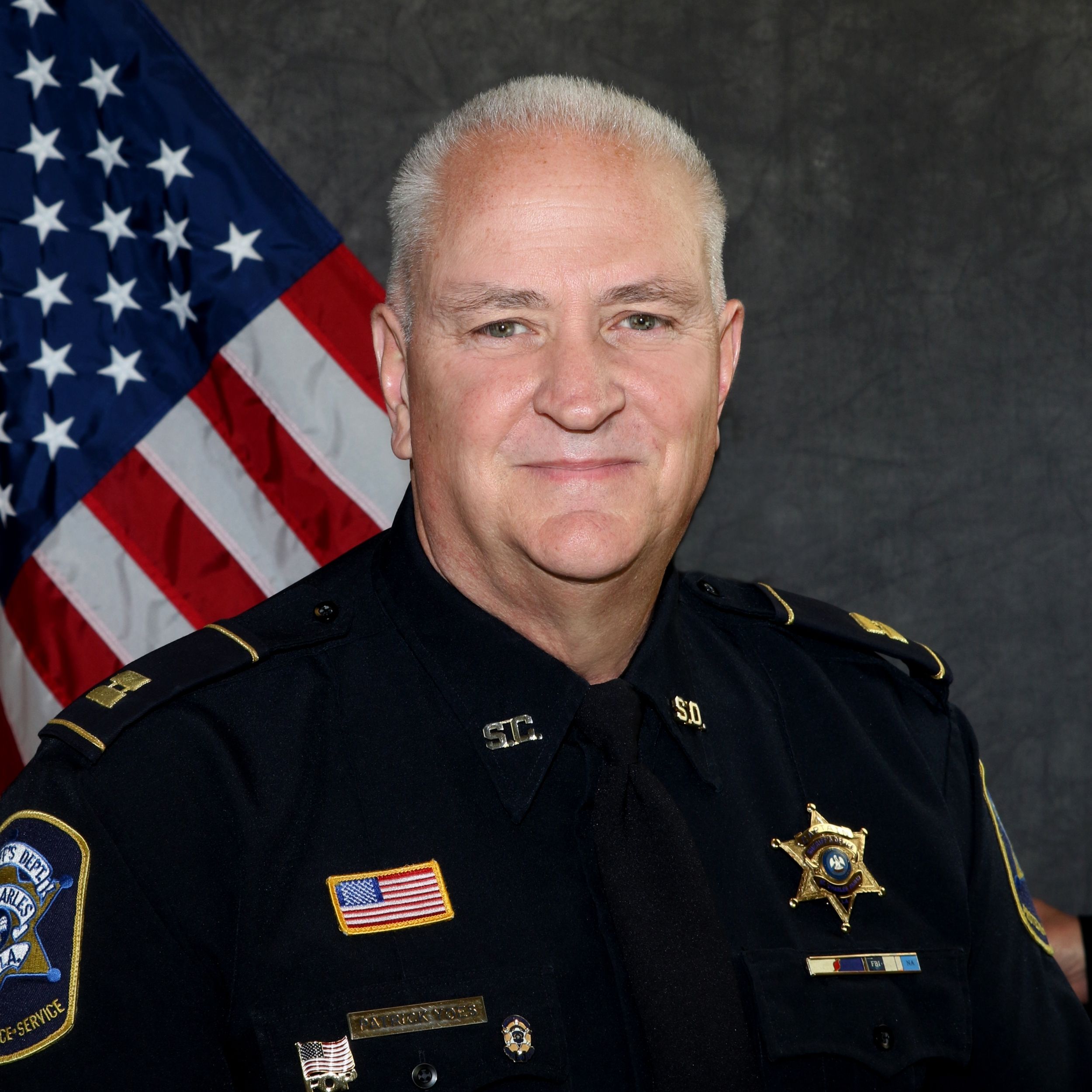
[00:00:00] Speaker A: We are very fortunate to have with us today one of law enforcement's strongest champions in Washington, D.C. senator John Cornyn from the great state of Texas. Throughout his tenure in the Senate, he has been an ally and an advocate for the men and women in law enforcement. Before he came to the Senate, Senator Cornyn served as a Texas Attorney General, and before that he was a justice in the Texas Supreme Court. As a senior member of the Senate Judiciary Committee and a former majority whip, he has been a tireless advocate for the men and women who. Who put their lives on the line every day. I'm Patrick Hills, national president of the Fraternal Order Police, and this is the Blueview.
[00:00:32] Speaker B: Senator, I appreciate, I know your time is busy. I know there's a lot going on. I appreciate you taking some time with us to talk.
I want to talk about some of the things that are going on in Washington affecting law enforcement. Before we get, before we dive into it, could you just tell us a little bit about yourself?
[00:00:48] Speaker C: Well, I'm a recovering lawyer by profession, and I then went on and served as a judge in a court of general jurisdiction in San Antonio, a district court judge for six years. Then I served on the Texas Supreme Court, which is our primary, notwithstanding the title, it is primarily a civil court. We have a court of criminal appeals, as you probably know, in Texas, which is our criminal court of last resort. And then I was Attorney General for four years.
And of course, that's where I began to work most closely with law enforcement and victims, crime victims.
And then I got to the Senate in 2002. So I've been here a long time, but working primarily on the Judiciary Committee.
That's part of my DNA, and confirming judges and trying to pass law to protect law enforcement and to protect victims of crime.
[00:01:49] Speaker B: Yep. Senator, I will tell you, there's a. There's a bill that we had that was very important to us for years. We fought it for 40 years, and when we finally got it passed a little over a year ago, the Social Security fair to sack, you were. You supported that bill. And I want to thank you on behalf of our members. That was an injustice that needed to be fixed and just we didn't get anything that every other American didn't get.
We got what we're entitled to, and we appreciate your support on that bill. Send. I want to talk about. There's a number of bills that are just affecting, that have an impact on law enforcement. I thought we'd kind of talk a little bit about each one and kind of get your perspective.
[00:02:25] Speaker A: On them.
[00:02:26] Speaker B: Let's start off with the caller Walker, Carla Walker act registry for DNA investigations, if you can talk a little bit about that.
[00:02:34] Speaker C: Bill yeah, Carla Walker was a young woman who was killed back, I believe, 1972, and no real solution to it until a company named Othram developed a genetic genealogy test that was far more specialized than DNA testing and enabled her killer to be identified.
It's something that's expensive. And so we've been trying to figure ways to, to make that more affordable for local law enforcement, recognizing that we have a whole spectrum of law enforcement from large urban areas that are well funded, relatively speaking, to smaller jurisdictions where they just simply don't have the resources. But this is, I think, very promising in terms of our ability now to use this technology to solve cold cases like Carla Walker's case.
[00:03:36] Speaker B: Yeah, another, another bill. Look, technology is constantly changing. We need to stay ahead of it. So clearly the tools that, the tools we don't know about that are potentially in the future, we need to make sure we pave a path to leave those to give us the opportunity to truly investigate and bring justice. I want to talk a little bit about the CARE Act President Trump signed in the law that the CARE act, you were a part of that. You talk a little bit about, you know, law enforcement officers are exposed to lots of dangers and their ability to be able to overcome those who having the proper equipment to do it. And trauma kits are something that certainly has saved lives, countless lives across this country, not just police officers, those within the community. And I know you played a part of that. Bill. If you talk a little bit about your perspective on the trauma kids.
[00:04:23] Speaker C: Well, I think, you know, law being a law officer is a tough job, as you know and as your listeners know.
And we want to make sure that law officers are adequately protected, increasing awareness, for example, of concussions and brain injuries among public safety officers. But more broadly, make sure that there is critical Mental health collaboration, which has reauthorized critical grants for mental health courts and crisis intervention teams and other programs to help law enforcement assist individuals experiencing mental illness for nearly two decades. But we need to protect both the protector and the victim.
And then, of course, we've worked on things like the Law Enforcement De Escalation Training act, recognizing that a lot of the incidents, the encounters that law enforcement has these days is with somebody who is mentally ill and suffering through a mental health crisis. So trying to train again, not every jurisdiction has the resources to go through this kind of training, but to make this more broadly available to all Law enforcement for the safety of the officer and the individual who is going through that crisis. So this has been one of the biggest changes, I guess, since I've been in the US Senate, going from a strictly let's be tough on crime to let's be smart on crime.
Let's make sure that we enforce the law and we protect and respect the person investigating and enforcing that law, but also make sure that people who do, who are mentally ill or need mental care can get to the proper treatment and hopefully will not be in a position to reoffend. So this has been really one of the biggest developments over the years is to move toward. And I know sometimes people say, well, that sounds like kind of squishy, kind of, you know, fuzzy, warm feeling sort of law enforcement, but I think it really is smart enforcement of the law and conserves scarce resources while actually getting people who need the help to the right place. But, but also recognizing being a police officer is a tough, tough job. And you have to experience things that most of us never have to encounter. And there's a cost, a price to be paid for that in terms of the mental health and the welfare of the, of the officer, him or herself.
[00:07:05] Speaker B: Yeah, I want to talk about the officer wellness. I want to, I want to dive into it a little bit, but I would like to comment on the, on the de escalation training. I would argue that law enforcement officers today are better trained than they've ever been before. But I'll also argue that they're dealing with much more now than we've ever done dealt with in the past. That training is something that, that is an evolution. It needs to continue to evolve. And those tools of de escalation, something that we work closely with you and we're very proud. 2022, this was signed into law.
Appreciate your work on that. We need these tools in order to be able to better effectively police our communities and do it in a way where it's safe, everyone. So, so thank you for your leadership on that. You brought up wellness issues. Not only there's two sides, you brought aside the public we're dealing with. We are dealing with a lot of challenges within our communities that do make our jobs less safe. But you also brought up the damage done to law enforcement officers too. You know, we ask officers to do some things that are. I say, I always argue that, you know, say that we are ordinary people who are called upon to do some pretty extraordinary things at times.
At times we're dealing with a segment of society that most people would like to think don't exist. We're human.
And because we're human, the same things that affect everyone else in the community certainly affect law enforcement officers too, and we're exposed to them. Those invisible injuries cause a lot of damage to our police officers. And my position is we have a moral and fiduciary responsibility to fix what's just broken in the service of others. So I want to talk about your work that you do on data that's being kept just officer wellness in general. I know that this is something that you've been very much engaged in.
[00:08:45] Speaker C: Yeah.
For a long time now. We've become more aware of what in World War II used to be called shell shock or the sorts of traumatic brain injuries or post traumatic stress syndrome.
We've gotten a lot more refined in how we regard that. But it doesn't just happen in war. It happens in law enforcement too, because as we've been discussing, basically you all are the sort of civilian counterpart of military conflict when you're protecting our communities and experiencing things, as we've said, most people have never had to experience. So making sure that the mental health of the officer is protected and dealing with things from like traumatic brain injury to post traumatic stress syndrome, fortunately, about which we have learned a whole lot in recent years as a result of our military conflicts in places like Iraq and Afghanistan.
But this is really, really important.
Concussions, brain injuries, trying to help make sure that those resources are available again. So much of what the federal government does is tries to supplement through various grants and the like, what local officials are able to provide. But some local police stations, police departments are able to do a lot, but many of them can't do much just because they're not well funded and they're just not very sophisticated. In a place like Texas, such a huge state with 32 million people, I mean, we run the gamut right from Dallas and Houston and Fort Worth and San Antonio to smaller jurisdictions.
[00:10:42] Speaker B: All points in between.
[00:10:44] Speaker C: Yeah, all in between. So when I was attorney general, we did this. A lot of this started a lot of the effort in the cyber area with something we called the Internet Internet Bureau, which sounds kind of quaint now. And now it's a cybercrime protection function. But recognizing that the resources that local jurisdictions have for everything from cybercrime to, let's say, forensic testing, that's why it's so important that the federal government can supplement what's being done at the state and local level.
[00:11:18] Speaker B: Yeah, well, we appreciate the opportunity to work with you on. On the traumatic Brain injury. It is the studies that we were, you know, you look at law enforcement officers and the exposure that we have. It's, it's. I recognize that in a lot of different professions from, from professional sports, they, they really dive into this because it's important. But the same exposure in some extent is to law enforcement officers as well. I appreciate your work on that legislation as well, and we were very pleased to be able to work with you on development and legislation. So I want to shift gears just a little bit. I want to talk about recruiting retention. It's a challenge that we have at really all aspects of law enforcement. And I would argue with it. We don't have a recruiting retention problem. We got a retention recruiting problem. If we can take care of the officer officers that are in place now, then we will, you know, it'll be much easier to recruit other officers because our best recruiters are officers themselves. There's a lot of things the federal government has, at least Congress is taking on taking up that that can improve recruiting retention and certainly in Texas as well. If you could kind of dive into that a little bit of your thoughts.
[00:12:24] Speaker C: Well, first of all, unfortunately, policing and law enforcement has become somewhat politicized. And I'm thinking now about the defund the police movement and some of these communities, which is a terrible idea and proved to be a political loser.
[00:12:41] Speaker B: It was a failed experiment.
[00:12:42] Speaker C: Absolutely. But then we're, we're now seeing that into going after other professional law enforcement officers like ICE and demanding really that federal law not be enforced. And of course, as I like to point out, these federal law enforcement officials, they didn't make this law, Congress made the law, and they're merely doing what we asked them to do, which is to enforce the law. But unfortunately, there's a lot of disrespect being shown to our professional law enforcement officers at the state, local and the federal. Federal level now. So in addition to the, to the danger associated with the job, which is sort of inherent in the job, I think, you know, the idea that your family says goodbye to you in the morning, not quite sure whether you're going to be coming home at night, is unfortunately an aspect of the job that may always exist. But piling onto that, the disrespect for the official, that again, is doing nothing but enforcing laws passed by Congress or the state legislature. Then there's the competition, of course.
Now as we are ramping up on immigration enforcement at the federal level, there's always salary competition among different jurisdictions. And I see jurisdictions are able to Pay a little more, tend to poach on the jurisdictions and the people who work for those jurisdictions that can't pay as much. So I think, you know, it's hard to fix that, but it's part of the reality of certainly recruitment and then the retention part of it.
Hopefully we, we helped a little bit when we dealt with the Social Security Fairness act and dealt and eliminated the penalty for law enforcement as a result from Social Security that previously existed under, under the law. So we need to make it a little, little easier and certainly not harder for people to serve in these important positions because public safety depends on it.
[00:14:52] Speaker B: Yeah, absolutely. I want to, I'm use that to segue into the next section, but I'll make a couple of comments of what you said. You know, it really comes down to it. I will tell you we did surveys on why people leaving law enforcement, why we're having trouble pulling people in. And I'm going to tell you what one of the common factors were. You're right, we are poaching. We're trying to pull people to other agencies. Some pay a little more than others. The reality is you really got to decide what law enforcement, what public safety you want to have within your community. If you want to have budget, you're going to have budget service. And that is not healthy for anyone. You just got to, you got to first, you got to accept what it is that you want it to be. But you know what our survey told us? Our members just want leadership. They want someone to stand up for them and say, I'm going to pay you to do a job. I'm going to teach you how to do that job. I'm going to send you out to do that jobs, to do it. I'm going to support you when you do it. And we went through a period of time where we were not doing that. I think it doesn't matter what your profession is.
Everybody needs two things in life. They need to know what they do is important and that it's appreciated. If those two things don't exist, you're always going to have problems regardless of your discipline.
So in reality, what you're talking about is I 100% agree with you. What we need to do is we need to recognize the value of law enforcement officers. We need to decide exactly what quality law enforcement we have. And we want it throughout our country. And it should all be, always be. It's the most important cornerstone of everything in society is our safety.
Without that, I think everything else is just, you know, secondary.
[00:16:25] Speaker C: If I can Just add one thing that you sort of alluded to and that is when, when bad thing, but when bad outcomes occur, and I'm thinking particularly in the immigration enforcement space where civilians interfere with the law enforcement operation and then because of split second decisions that have to be made for, by the officer for his or her own safety, sometimes they're tragic outcomes.
But I think we do need the leadership that basically says that is unacceptable for a bystander to interfere with the law enforcement operation. But then when the police officer is sued, we need to make sure that they are defended.
And recognizing that this is not a science, this is an art and you're dealing with humanity and there's always uncertainty inherent in it and judgment calls. So I think in my book, all else being equal, the officer deserves deference in their split second decisions which are made for not only their safety, but for public safety.
[00:17:45] Speaker B: Absolutely. And look, there's no question I can give you case after case after case to show that went the opposite way because officers didn't act, you know, quick enough. When some of those signs exist, okay, it's a very volatile, very volatile at times. But I will tell you, it all starts with one thing. When there's a compliance, then things run along smoothly. When there's a lack of compliance, then the outcome is always going to be uncertain and sometimes they're not. They're never going to look good.
So the reality is we all have a job to do. You mentioned it earlier. Congress passed laws, I don't know a single law enforcement officer to pass a law that did now enforce it. We're doing the jobs. The laws that were passed by people in Congress are in cities or across this country.
And the reality is when we do those jobs, there should be an expectation that we're doing them because we're being supported in doing them, because we're doing exactly what we're told to do. If Congress doesn't like these laws, they need to change the laws. What they need to do is stop demonizing law enforcement officers for simply doing what they would they empowered them to do. And, and if we could do that, then I think we can solve a lot of the problems.
I say that because I want to segue this into something that is very passionate to us and I'd love to kind of dive into it. And that is the safety of law enforcement. I want to put it in perspective for you. Every 21 hours or so in this country, a law enforcement officer shot every 20, and that's for the last 10 years.
So there were 367 officers that were shot last year alone, 111 so far this year. And we're only what, four, four and a half, five months into it now, a little over five months.
We have an epidemic. We have officers being shot just simply because they wear a badge. We have officers that are being ambushed, attacked, and somehow we can't get Congress to recognize it and want to talk about this issue. If this is any other profession, we would not allow it.
I can give you quantitative data to show that their law enforcement officers are being targeted because of the rhetoric, because of the attacks on law enforcement, because of the undermining our authority, demonizing, whether it be ICE or whether it be local law enforcement, all of it. We're creating an atmosphere that is just simply not safe to our country. And it's certainly not fair to those that are brave enough to pin on a badge and go out in communities and protect people. So I'd love to really dive into that because I struggle to times to get Congress to acknowledge the fact that they have the Protect and Serve act, something that would send a very clear message that we're going to stop allowing violence towards law enforcement officers and give the federal government Department of Justice the ability to step in when prosecutors refuse to do so and hold people accountable for the attacks on law enforcement. We wouldn't allow it in any other profession. And I'd love to hear your thoughts on how we can make, how we could get this bill moving, how we can get a hearing on the violence towards law enforcement, how we can get Congress to recognize something that every law enforcement officer across this country knows, that is there's a target on every one of our backs.
[00:20:36] Speaker C: Well, since 2016, which is what, eight years ago, no, 10 years ago now, I first introduced the back the Blue act, which would increase penalties for criminals who assault police officers and in the case of the death of the police officer, would make the death penalty available.
We haven't obviously been successful in getting that fully across the finish line into the President's desk. But I think there's really no way to solve this except to increase the deterrence.
And obviously many of the people who engage in this sort of misconduct haven't been deterred in terms of committing crimes anyway. So when they engage with law enforcement, it actually assaults, assault the officer that's merely enforcing the laws. As you point out that Congress or state legislatures pass that we have an obligation to, I think, increase the deterrence and to provide additional remedies for for prosecution, including the death penalty in Appropriate cases.
[00:21:44] Speaker B: All right. Yeah. Well, we appreciate your work. You do that also in the Ice Protection act, these things need to be passed. We're committed to working with you to get these across the finish line. We need to find some stability within our profession. We need to recognize that we're damaging law enforcement officers and putting their life on the line.
They need to be shown the respect that they earned because of the job that they're doing. And we need to recognize that some of the things that are being done by a lot of public officials when they're attacking law enforcement is not helpful to our professional nor the quality of life we have within our communities. Senator, is there anything else you'd like to add touch on?
[00:22:23] Speaker C: Let me just say I've very much enjoyed working with the Fraternal Order of Police and you and your leadership and all law enforcement across the spectrum, whether it's state, federal or local law enforcement. And this is one of the most important things that I get an opportunity to do as a member of the Senate Judiciary Committee that has primary jurisdiction over these issues.
And I think the public's with us.
Obviously we talked about the defund the police idea, which proved to be a terrible idea, particularly for the people in these minority communities that the left said they were trying to protect.
[00:23:05] Speaker B: They're the ones that impacted the most.
[00:23:06] Speaker C: Absolutely. Yeah. And I think so. I think we have a good case to make to the public and to the voters and we just need to be more confident about the righteousness of our, of our cause and continue to make that case. And I found that, you know, for me, I support law enforcement at all levels. Of course people make mistakes occasionally, but I think the, the, the, you know, that, the, that unless it's something conscious or egregious and of course we're getting now into the issue of qualified immunity, that we ought to side with law enforcement that's making again, split second decisions in the interest of public safety. And unfortunately, in these kind of dangerous encounters, unexpected things can happen sometimes. But that doesn't mean it's necessarily the fault of the officer or the, or the entity to which they, for which they work. So want to appreciate that partnership and want to keep it up. And we got, we still have work to do.
[00:24:16] Speaker B: Oh, no doubt. You know, there's a human element involved in all of this. Law enforcement is part of that human element as well. And we're not always going to get it right, but we do, and we do more often than not do. And when we don't, what we do is we analyze where it went wrong and we adjust because that's what, that's what quality law enforcement does. And so it should be. But the reality is, is that when, when others rush to judgment without going through the full process of doing so, you're throwing fuel in a fire, it. Cursing the very things you create when it, when it creates, you know, havoc within our communities. Sir, thank you. I thank you for standing up for law enforcement. I enjoy working with you as well, continue in that continued relationship as well.
Just want to leave it with just one thing. You know, we talked about that personal element. There's real people involved here.
And, and when we all work together, we all have a common goal. When we all want the same thing. We want safe communities, we want strong communities.
When we all work together, you look at communities where that happens and I'll show you strong communities. I'll show you safe communities where you look at communities where we're. I mean, communities where we're kind of at odds. In any part of this spoke, in this wheel is broken, then we have a broken system. We all have a common goal. We all want the same thing. What we need to do is focus. There's not a single problem we can't fix. When we all work together, we need to stop talking at each other, start talking with each other. Thank you, sir. I appreciate your time and I wish you well.
[00:25:44] Speaker C: Thanks so much, Patrick. Good to be with you.
[00:25:46] Speaker B: You got it. And to our. To our viewers and listeners, those we talk about the issues that are so vitally important to the men and women who suit up and show up every day across this country. Thank you for tuning in.
[00:25:57] Speaker D: Be sure to subscribe on Apple Podcasts, Spotify or anywhere else to get your podcasts. To get the latest from the national fop, make sure to follow us on Twitter and Facebook, LFOP and on Instagram @FOP National. Thanks again. We'll see you next time.