Episode Transcript
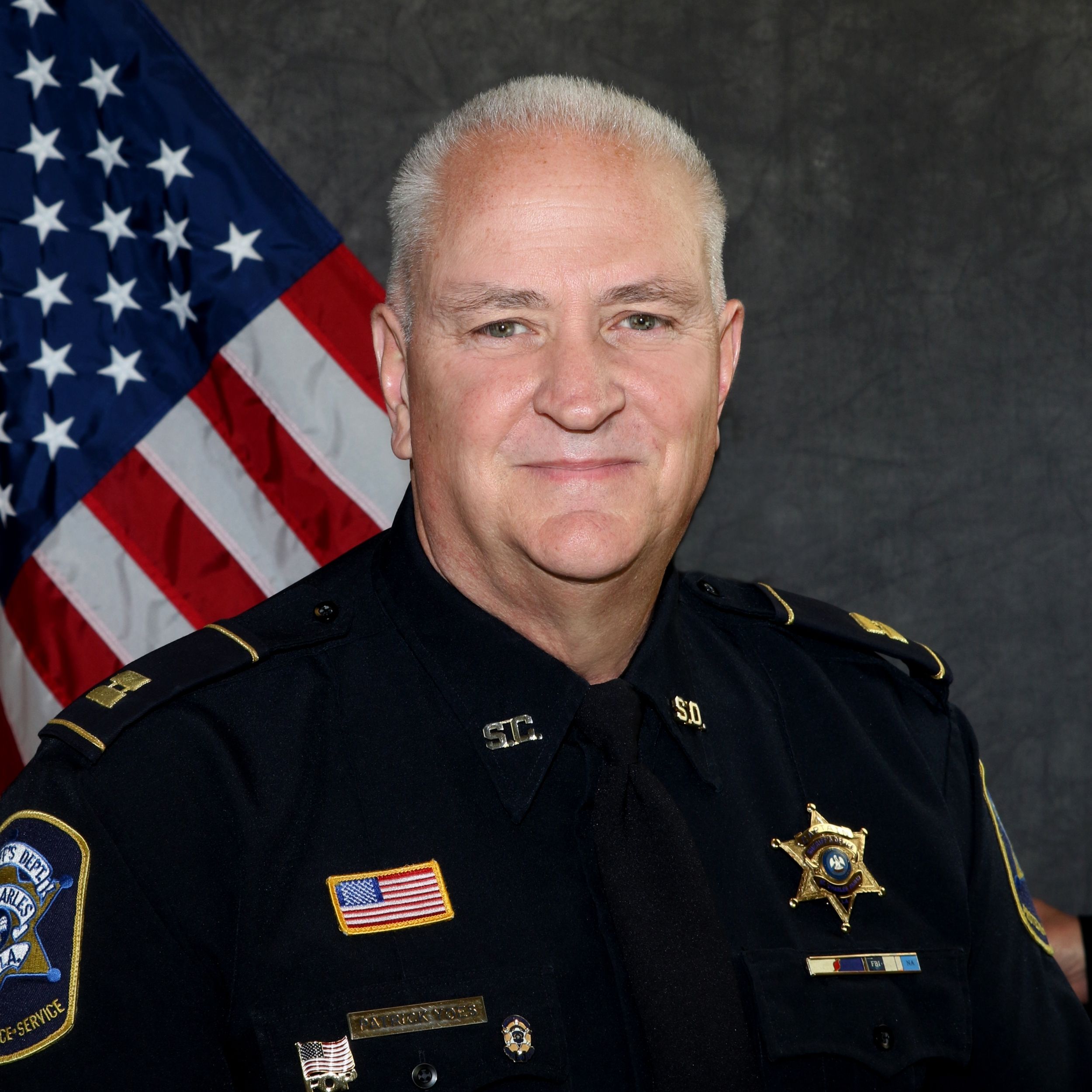
[00:00:00] Speaker A: Today we're joined by Nick Daugherty, founder and CEO of Financial Cop, a service that helps police officers achieve their financial goals by helping them manage their money. Nick served with the Grand Prairie Police Department in Texas for over 20 years before retiring in 2023. With Financial Cop, Nick has dedicated himself to helping officers get out of debt and promotes healthy spending lifestyles. I'm Patrick Hills, national president of the Fraternal Autoplace and this is the Bluebird. Well, Nick, thanks for joining us. I appreciate you. This is a topic that's, that's important to our members.
You know, we all know someone who's struggling financially, especially in today's times. You know, it's just a very difficult time.
Nick, before we d. Because we got a lot we want to talk about, but let's tell us, just tell us a little bit about yourself.
[00:00:43] Speaker B: Yeah. So I came into law enforcement in 2003 with the grand Prairie Police Department, which is also an FOP lodge. And, and I just did stupid with money on steroids. I was 80,000 in debt.
[00:00:53] Speaker A: 21,000 was, I think we all had that story.
[00:00:56] Speaker B: Yeah, but, but I put $21,000 on a credit card on a car stereo system.
[00:01:00] Speaker A: Okay.
[00:01:00] Speaker B: So I, I did stupid on steroids and I got stuck in the overtime cycle where if I didn't work 20 hours a week, I couldn't pay my bills.
Met the love of my life who was debt free, who wouldn't marry me until I addressed that issue. And so I fell in love with the debt snowball and how to accelerate and pay off your debt. And so I worked over a thousand hours of overtime and sold a bunch of stuff over 24 months. And on March 3, 2007, me and Carrie got married a hundred percent debt free. And that's what sparked my kind of sense of urgency in learning about this stuff. I self taught myself the financial world because all the financial planners were talking to me like I was an idiot. And then Fast forward to 2011. My, my chief became the new chief, Steve Dye. And he said teach my my cops about this. And so we've developed the first financial wellness class that's now been taught to over 100,000 first responders across the country.
[00:01:44] Speaker A: Great yet. And it needs to be, it needs to be part of our academies. We need, you know, it's. The stressors of this job are enough. The financial burdens that are associated with it as well. Got things we don't, you know, anything we can do to, to get that resiliency to, to have help the Officers is great. Nick, the interesting thing about Financial Cop is, as you said, you're. You're a police officer.
You lived, you created a corporation to help others. It's got to be pretty rewarding. I imagine others within your agency and others say, hey, if he could do it, I could do it. So they could relate. It's someone they know. It's not somebody trying to teach something to them. It's somebody that's walked in their shoes. Talk a little bit about Financial Copper, how it, the evolution, how it came to be, how you thought, you know, this, this platform, how it was embraced by members and kind of where it is today.
[00:02:26] Speaker B: You know, my chief ordered me to start teaching this class and I really hated it at first because once a month I'd go to the academy and I felt like this is what I should be doing. And I absolutely loved being a cop. And in 2016, I had somebody bring me to my knees, really. And they said, and I quote, they said, someone's waiting for you to become what God intended for you to become. How much longer are you going to make them wait? And my entire world came crashing down. And I came home from that conference that weekend. I went straight to my chief's office that Monday and said, I'm done. And he said, are you sure? I'm like, this is what I was put on this earth to do, is to help my brothers and sisters with this. And it's been rewarding because I got to have the rewarding job of being a cop. There is no best job out there other than being a street sergeant, which was my favorite job.
But now I still get to really impact and help my brothers and sisters and dedicate my life to helping them with something that I'm extremely passionate about.
[00:03:11] Speaker A: Yeah, that's awesome. So as I mentioned as we started, you know, law enforcement officer deal with so much stuff and it's not hard for us to get caught in those safe cycles of, you know, all these financial burdens, of just trying to live life today in today's society. And I just trying to make as far as you could reach. But also I have some satisfaction that you're accomplishing something too. And that's that satisfaction that need to feel like you're accomplishing something that's getting people to dick holes.
So let's dive into some of the strategies or some of the philosophies that officers could use or just tools that they could use that not put them on this path of saying, okay, man, I'm too far in now. How Do I get out?
[00:03:49] Speaker B: It's the dreaded B word, the budget. Living below your means. And it's crazy. In law enforcement right now, There's a lot of us that work in law enforcement agencies that's paying us a lot of really good money. I mean, we're making very good money. That's one of the benefits of the COVID thing, is that we got this bidding war against each other. And so you think about a cop that on average is going to earn somewhere between 2 to 5 million pieces of the game of money. It's what you do with those pieces that dictate whether you retire broke or you retire a millionaire. And we prescribe. When it comes to the budget, it's not a bad word. It actually will help you spend more if you actually do it right. But we use what we call the swap rate mentality of budgets. If you think about a SWAT team, the first number one thing they do before they walk out the door is they do an operations plan. Where are we going? Where's the nearest hospital? What's my near? What's my stack order? Who's breaching? Everything's planned out to a T. But the most important thing that SWAT team does is not the ops plan. It's not the raid. It's what they do when they get back. They come back and they debrie, breach, do an after action. Did everything I think was going to occur go according to plan?
[00:04:48] Speaker A: What we need to adjust moving forward.
[00:04:50] Speaker B: Just like no two swot reach are the same, no two monthly budgets are the same. We need to be doing an op plan before the month begins. We need to debrie breathe throughout the month because nothing goes according to plan. And we need to do a critical after action at the end of the month to go, hey, what went right?
[00:05:02] Speaker A: What went wrong?
[00:05:03] Speaker B: Hey, kid. Kid got sick or kid broke a leg, you know, AC went out. What. What happened? And how we prepare for those things.
[00:05:08] Speaker A: Yeah, yeah, absolutely. Without a doubt. I mean, you're right. It's. As always, things are going to come up, and your ability to be able to plan today is going to make those things that are coming up a lot easier. Let's. Let's talk a little bit about how helping officers I, you know, I'd love to hear stories because I think we all, you know, how do adults learn? Adults learn through a lot of things. One, they got to know how. How it's. It's meaningful to them. Obviously, this is something, but they need to know it at a time when they need to know it maybe, maybe it's hanger, maybe it's not. The other one is they need to know how it applies to them. And there's nothing better when you, when you're talking to adults telling stories because they remember the stories, they understand and they can relate to them. So share with us some of the successes that you had a peak lips that are struggling and felt like hey man, I'm ending my rope, I've dug myself a hole, a hole I'm still digging. I don't know how to stop digging.
Tell us about some of those successes that you're able to pull.
[00:05:58] Speaker B: It's some of the most rewarding emails and calls I get from officers that call and go hey, I went to your class and now look what I've done. I've got an officer from New Jersey that actually the first time he ever went through my class was when we taught the first time for the FOP Wellness. And he came to me about a year, year and a half ago and he's like, he showed me his debt snowball and he was literally thousands of dollars away from being debt free after paying over $180,000.
I found an officer in Dallas who said for the first time I get to spend time with my kids and I dictate when I, I start to, when I want to work overtime. My favorite is, is I had a text from a guy literally two weeks ago. I taught him in 2017 as a recruit. We're talking a 23 year old kid. And now here we are eight, nine years later and he sent me a screenshot of his net worth. He just crossed a million dollars as a officer and he goes, I put the things you took and put into place. When I was a rookie cop I budgeted, I saved, I started to invest in my sword 57 and he's 30, lower 30s and he's a millionaire already.
[00:06:59] Speaker A: It's awesome. That's awesome. You know I know when you so something I'd like to, there's much I want to talk about here but I want to finish it up and talk a little bit about you know I think especially young officers they looking at retirement so far away they don't think going to get there but there's some things they need to know now we'll come back and we'll finish up with that but right now I want to talk about, I want to talk about just that, that whole process. If you could just unwrap it for me. You know, here's a person, you know what advice are you giving just. I know you teach a full day of class on this, but I'm going to ask you to just kind of give us a little bit of what our appetite, of what it is that you're going to, the tools that they're going to give me and what the end goal is.
[00:07:35] Speaker B: Keep it simple.
[00:07:36] Speaker A: Absolutely.
[00:07:37] Speaker B: There's nothing that needs to be complicated. The stuff you see on Facebook reels about the complex financial. None of that stuff. Does it work? Maybe. I don't know. But I know when you keep it simple, it works.
When it comes to winning with money, we, we, we, we treat what we call the eight phases of financial training. Where are you in your fate, your training phase? Just like we started as a cop, we don't get to go through phase one and skip to phase four.
Sometimes we struggle with training. We pull them out, we go to remedial. Sometimes the AC breaks. Well, the only way you can accelerate through the phases of training is if you're a lateral officer. You got some experience. If you're doing good with money, we can accelerate. It starts with a budget.
We go straight into baby emergency funds. Then we go straight into how to pay off debt. We go straight into fully funding an emergency fund. Then we get into the fun of how to really start to build wealth. The fun vacations, the retirement savings, the paying the house off, the saving for the Corvettes and finishing off with my favorite, which is phase eight, which is build wealth like crazy and give wealth like crazy. Enjoy the fruits of your labor. It's about sacrificing a little bit in the beginning because later on I don't ever want you to sacrifice when it comes to money.
[00:08:42] Speaker A: Yeah, absolutely, absolutely. So let's talk a little bit about, about that retirement part. I, you know, I knew when I just give my own evolution, you know, I got into law enforcement retirement, that thing we always talked about. I couldn't wait till we get here, couldn't wait till we get here and just saw it as so far away that I really didn't get much thought to it until the next thing you know, here it is. And I really hadn't planned for it the way that I should have. So let's talk about someone who's, you know, maybe five, 10 years in right now.
That's probably the, you know, five, 10 years is probably the range of people that are really kind of bigger themselves a pretty good hole at the same time. So they've got some, some decisions to make or what's. Because what's going to happen in those first five, 10 years is going to really set up where they're going to be long term.
Let's talk about where someone needs to be in order to be able to retire comfortably.
[00:09:28] Speaker B: So first and foremost, overly on your pension. I love the pension, but I hate the pension because it's a false sense of security. And the reality is by the time you realize your pension is likely not enough to retire on, you've lost your greatest asset time.
In the early phases, it's about focusing on paying off those high interest debts, not using credit cards without paying them off every single month. Having that fully funded emergency fundament yourself when the emergencies happen so that you have that wiggle room in your budget to be able to put money into your defer comp or put money into a Roth IRA or whatever your retirement account of choice is. Those early days is about setting that.
Think about when we were in build training. Those FTOs are trying to set the best baseline of how to become a good cop. Well, that's where the core keep it simple concepts of money. Setting that baseline so that we can get into the more complex stuff midway into our career or earlier if possible, to be able to fund those retirement accounts and be able to have the pension but also have retirement accounts to supplement that so we can retire the way we want to.
[00:10:25] Speaker A: Now Nick, I got to tell you know, I talked to offices all over the country and you know, I talked to some of the older officers, ones that maybe have retired in the 80s and 90s and I kind of refer back to that time, you know, I started in the late 80s, mid-80s, and I look back at that time thinking, you know, this is, this is not bad money. But if you look at what that money is today, you know, people are retiring thinking, hey man, I'm doing real good, this is a pretty good retirement.
But you fast forward 15, 20 years and they're still getting the same retirement puts them at a poverty label.
So in addition to that pension, you mentioned it, you love them and you hate them because they give a false security. I can tell you I've witnessed people over and over and over who sounds like, hey, I'm at some really good money that's not even close to what, what they need to be able to manage so beyond a pension.
You know, I think you're right, it's a false hope that pension is going to carry me for everything I need. The reality is it's not, at some point it's become dated and if you have not done the planning, you're going to have some other problems with it. Give some advice to those guys, things that, you know, we don't have to solve their problems here in a podcast, but I want, I want them to think about something and then we'll talk about how they can get in touch with you too to learn more.
[00:11:35] Speaker B: So full disclosure, I am a registered investment advisor, so I actually do own my own private wealth management firm, but it's owned and operated by cops. So whenever we're coming to investment advice, the first key thing is to find out what's best for you and always know what you're investing in. Why have the heart of a teacher from a financial advisor? We teach an entire lesson in our class called how to interrogate Financial Planners so we can build that trust and find the ones that aren't trustworthy. But when it comes to retirement, the pension's great. The younger you are. I love Roth IRAs because they grow tax free.
Our pension is going to put us in a certain tax bracket and they can cause issues on the way. Now that we have the phenomenal work from FOP and the IAFF on the Social Security and the windfall on nation going away, now we got Social Security added that tax mixed with that.
Almost every single agency in America has this beautiful program called the 457 deferred comp account.
You put your money into retirement now so that you can take it when you leave. And that's even more cool in the sense of you don't even have to worry about early withdrawal penalties no matter how old you are, taking advantage of the programs that we have with the 457 or those Roth IRAs to start to put extra money into retirement. Because the biggest issue in pensions is not having what you talked about, the cost of living increase. Well if we have, if the pension is the smaller part of our retirement because we started saving in retirement accounts in the 457s now we're not as concerned about that COLA because we've got the other assets to be able to fund that at the the cost of living for us instead. So you've self funded it in essence.
[00:12:59] Speaker A: Well one thing I'm very proud of the FOP and the work we did just and look success as a pals and fathers and no question a lot of people, you know, got Social Security off across the finish line. But I'm so proud of what we were able to accomplish with that because right off the bat every single one's getting 60% more of what their Social Security was and they're not getting it because they're giving them something. They give them what they should have been getting all along. It's just as such a. Is that the biggest robbery, the biggest theft? Probably American history is still real.
Tens and hundreds of billions of dollars away from the back off the backs of public employees. Because our only sin was that we chose to be public servants. I say that only because, you know, put it in perspective. I do love the fact that they're getting their money, but you know, getting money they were entitled to. But all of this collectively is going to get you somewhere where you need it. I, you know, I, I go back to Social Security. I'm use that as an example. I mentioned about, about some of the older members, the ones that are getting. There's one guy in particular didn't call me. He was Benny. Really man, Please pass this bill. Pass this bill. I'm thinking, man, this is going to be life changing. Right? Man retired back in the 80s. He said I need, I need my money. I said okay, I'm thinking we're doing something good for him. And he was ecstatic, cried when we passed it because he was getting $600 raise.
If your $600 is going to make that much profound impact.
I can imagine how many people were in his position that just thought they were retiring at a rate that get it. So I really want to hit that home. Don't, don't think that because money sounds good today doesn't mean that it's going to extrapolate into, you know, 15, 20, 20, 30 years from now. What's going to be your quality of life. That planing starts today.
And if you don't have those avenues of support. I look deferred comp. And I had work, you know, guy in my agency and I was a detective in agency. I wasn't there very long. He said you need to do this deferred comp thing. And he kind of, he kind of pressured me into it and may not thank him today because I never paid attention to it until one day I look guys, wait a minute. Where did this money come from as well? If it grows that much and I just put this little bit in. What if I added a little more? Yeah, absolutely. There's, there's some lessons there.
[00:15:02] Speaker B: Two, two parts of that you want to have some, some fun with. Defer account. Stop contributing dollar amounts. The proverbial $50 check. Change it to 1% because now Debbie to 3% raise. It gets 1% raise.
Great exercise. If you're close to retirement, we Tell all of our retirees you should be doing two monthly budgets 12 months before you retire. Your normal budget with your normal income and your normal retirement with your pension in your budget. That will tell you how much wiggle room you have. It'll tell you if you need another job. It'll tell you if we need to rely on the defer comp. And now we can tell you how long that's going to last.
It'll tell you everything you need to know about whether retirement is going to be successful or not by doing that budget, just using your pension instead.
[00:15:39] Speaker A: Nick, there's a lot, there's a lot here for our members. They really need to take a look at this. I have seen so many of our members at varied ages. Those that are just starting on a job, those that have been there five or 10 years, which seems to be the big one, and then others who kind of get a little more stable at some point. But everybody struggles with finance.
There's a lot to be learned here and there's a lot for you to share. If you know, you talked about agencies. I firmly believe this needs to be in every academy and it needs to be part of, in service training. We don't throw it to them once and expect that they're going to know what their entire, you know, 25 year, 20, 30 year law enforcement career, that needs to be reinforced the entire way. But, and agencies do need to make it part of their academies.
But also the FOP can play a part in that as well. You know, when you look at the ecosystem and one of the things that I argue, FOP take care of you from, you know, from, from birth to the grave and we do everything in between. It's expected for us to do the, you know, the, the law enforcement centric training and the things that we do, job stability, all of that. But the other part is the quality of life along the way. And that's one thing at the fop, a lot of all, I just do a great job with it. We all could do more of it. And it's all part of that ecosystem. Part of that ecosystem is empowering people with the tools to make some really good sound decisions.
Talk about how the FOP could play a role in helping promote. Yep.
[00:16:58] Speaker B: So the beautiful thing is I can't tell you how honored I am to become one of the official FOP business partners. And through our agreement with fop, we have built our own entire online virtual academy. And so if you go through the FOP member benefits, that agreement with FOP makes our virtual academy, free for all FOP members for 12 months. That's 12 months of unlimited use. So you can go through it with your spouse, you can repeat it. All the new material we put on there, from dedicated budget lessons to debt reduction to learning everything you want to know about what the heck is a rond? Ira? How does the stock market work? All of that's completely free with our partnership with fop, And I'm extremely honored to be able to provide that to your members.
[00:17:35] Speaker A: So I'd like to. I'd like to challenge our FOP lodges to. And the members of the lodge. Just go back to the leadership in the lodge, if you're in a leadership role, saying, we need to bring this training in. We need to. To make sure our members are taking advantage of this free online tool and in. You know, and adding more to it as well. And certainly you provide those services. So if someone wants to know more about how Financial Cop could be part of their LOD and create a plan for their members, how do you get in touch? Richard?
[00:18:00] Speaker B: Got three ways. You can go to our website, financial cop.com, obviously, you can go through the member benefit page through fop, or you can follow any of our socials at Financial Cop, where we put all kinds of free resources out there and free lessons on videos as well.
[00:18:11] Speaker A: Great. You got it, Nick. Thank you. Is there anything else you'd like to add before we wrap this up?
[00:18:16] Speaker B: I was in my class with two quotes.
My two favorite quotes. When it comes to winning with anything in your life, first and foremost, whether you think you can or you think you can't, you're 100% correct. That doesn't mean it's easy. But my favorite quote is, the magic you're looking for is in the work you're avoiding. If you put the work in, good things will happen.
[00:18:33] Speaker A: Two words, and I'm let. I'm gonna let you leave it on that one. Yeah. That applies to everything. Yeah. All right, Nick, thank you. Appreciate all you do. Appreciate the hope that you're giving to a lot of our members that are just trying to struggle, just everyday life. And there's a lot of great resources here, and I hope our members take advantage of. Thanks, sir. So I appreciate you. To our members back home or those that are listening on podcasts or those that are watching on YouTube, thank you for tuning in to the Blueview Podcast, where we talk about the issues that are so vitally important to the men and women who suit up and show up every single day. You stay safe.
[00:19:05] Speaker C: Be sure to subscribe on Apple Podcasts, Spotify or anywhere else to get your podcast. To get the latest from the national fop, make sure to follow us on Twitter and Facebook and on Instagram at FOP National. Thanks again. We'll see you next time.